Finding a drain field starts with checking septic records, locating the tank, and tracing the pipe that leaves it. The focus keyword, how to find a drain field, also means knowing when to stop. You can inspect the yard, but digging, probing, and soil tests may need professional help.
Table of Contents
- Can a Homeowner Find a Drain Field?
- Where Is a Drain Field Usually Located?
- How Do You Find a Drain Field Step by Step?
- What Tools Can Help You Locate a Drain Field?
- What Can Go Wrong When Finding a Drain Field?
- How Can You Access a Drain Field Safely?
- When Should You Call a Septic Professional?
- Frequently Asked Questions
Can a Homeowner Find a Drain Field?
A homeowner can often find a drain field by checking records and the yard. This is a good first step when the ground is dry and the tank location is known. A drain field, also called a leach field or drainfield, is the soil area that receives liquid wastewater from a septic tank.
The safest task is to gather clues without disturbing the ground. You can check closing papers, ask the health department for records, or review a septic plan. You can also compare the plan with the current yard. These checks do not disturb pipes, soil, or buried utilities.
When is locating the system a reasonable DIY task?
A careful property search may work when the tank location is already known. You can trace the outlet pipe away from the tank. The drain field is often beyond that pipe, but its shape depends on the system design and soil.
You can mark likely areas with small surface flags. Do not push stakes far into the ground. Do not drive cars or trucks across the suspected field. Heavy weight can pack the soil and limit how well the field accepts water.
When is professional help the safer choice?
Professional help is safer when records are missing or the yard has older systems. It is also wise when the field is deep, the ground is wet, or sewage is surfacing. A septic alarm is another reason to stop searching and ask for help.
Septic Tank Pump Jacksonville can help Jacksonville property owners choose a safe locating method. A professional can also explain whether you need to find the field, inspect it, or arrange septic tank pumping. These tasks are related, but they are not the same.
Where Is a Drain Field Usually Located?
A septic system drain field is often downhill or away from the tank. It needs suitable soil and open space for buried pipes. The exact spot depends on the lot, soil, slope, groundwater, and approved records.
A field is not always a flat rectangle. Some systems use several trenches. Others use one wider bed or a pressure system. A drainfield may look like normal grass, so surface clues can help but cannot prove its location.
What records can reveal the field?
Property records are often the best place to start. A septic permit, site plan, inspection report, or sale document may show the tank and field. Local health departments may keep septic records, but access rules vary. Make sure the record matches the correct property.
A plan may show distances from the house, lot lines, wells, drives, and other features. Older plans can be incomplete or wrong. Additions, pools, landscaping, repairs, and replacement systems may have changed the layout.
What landscape signs may reveal the field?
A field may have greener grass during dry weather. It may also have a long, level area with several grass strips. Small rises, shallow dips, or different grass growth may offer clues. These signs alone cannot confirm a field.
Standing water, sewage smells, or soft soil may point to a problem. They may also come from a broken water line, poor drainage, or rain runoff. Do not assume every wet patch is part of a septic system.
How Do You Find a Drain Field Step by Step?
The safest search starts with information, not digging. First, confirm the property boundary, review records, and mark known features. These steps can narrow the search while limiting damage.
Step 1: Check records and ask past owners
Look for permits, inspection papers, care notes, and closing documents. A past owner, landlord, installer, or local office may know where the tank sits. Records may use terms such as leach field, absorption field, or septic system drain field.
Compare the plan with the yard today. A house addition, pool, shed, drive, or fence may show changes. If the plan and yard do not match, the plan may not show the whole system.
Step 2: Locate the septic tank first
The field is easier to find after you locate the tank. The tank is often along the path of the main sewer pipe leaving the house. Cleanouts, inspection ports, and old access covers may offer clues.
Never open a tank by yourself. Septic tanks can hold dangerous gases, and an open lid creates a fall risk. A professional should handle tank access, pumping, and inspection.
Step 3: Trace the outlet pipe
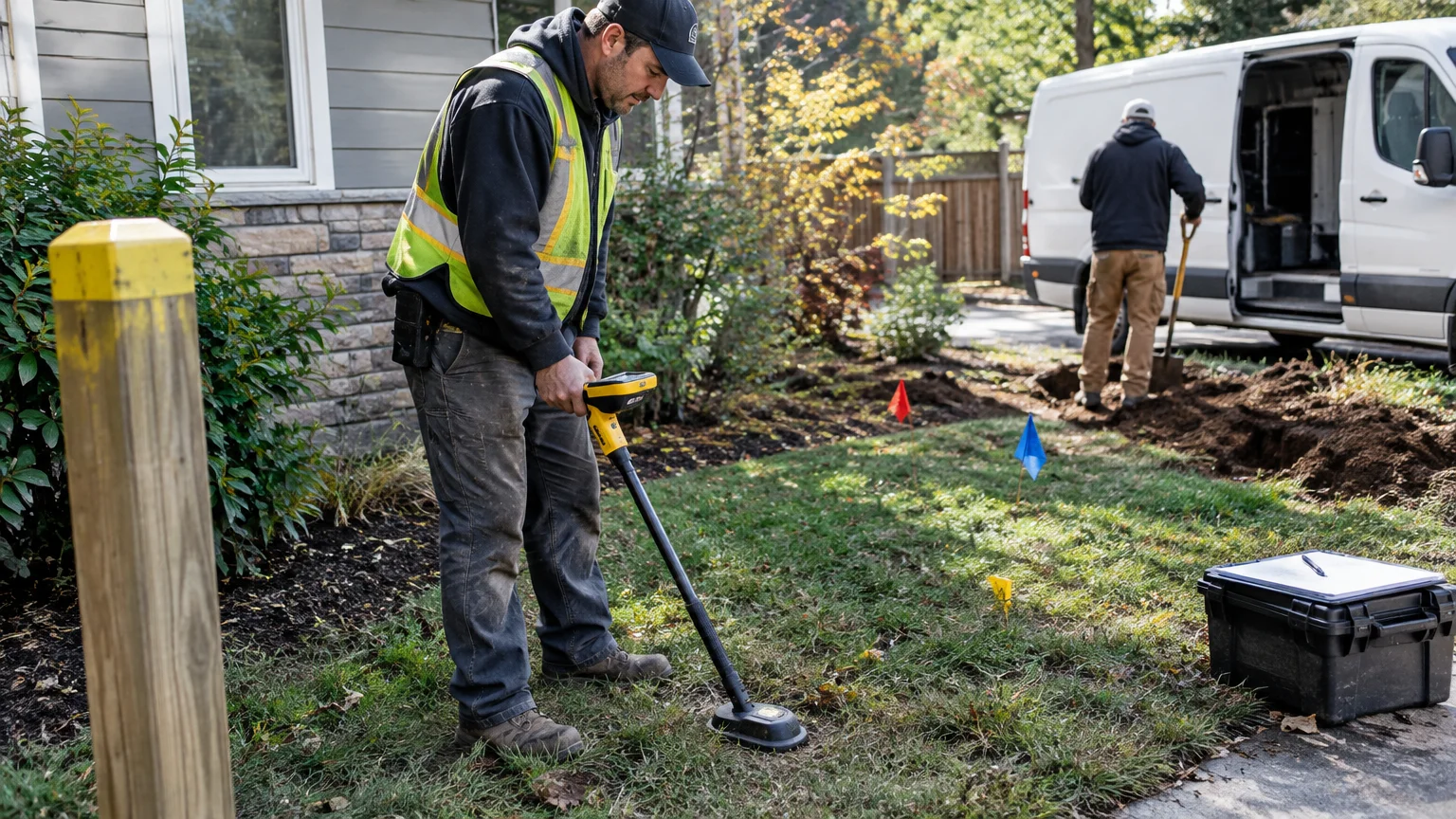
The outlet pipe carries liquid from the tank toward the field. It may run in a straight line, but older systems can have unusual designs. A professional can trace the pipe with safe locating tools when its path is unclear.
You can study the surface along the likely route. Look for settled soil, narrow grass changes, or a line that matches the site plan. Do not dig until underground utilities have been marked.
Step 4: Confirm the likely field area
After finding the likely route, compare the area with the permit. The field needs enough room for its trenches or distribution area. Do not use it as a building site, parking area, or place for deep-rooted trees.
Stop if you cannot confirm the field without digging. Professional locating is safer than repeated probing. This matters even more on older Jacksonville properties with unknown repairs.
What Tools Can Help You Locate a Drain Field?
Basic tools can help with a visual search, but they cannot prove the exact field location. A site plan, measuring tape, marker flags, flashlight, and notebook are useful. Take notes and photos before you change anything in the area.
A phone can help you compare the yard with an old plan. It cannot prove where buried pipes are. Mapping apps and property lines may be wrong or out of date.
What basic tools are useful?
A homeowner may use these items during a surface search:
- A copy of the septic permit or site plan
- A measuring tape for checking marked distances
- Small surface flags that do not need deep stakes
- A flashlight for viewing cleanouts and inspection ports
- A notebook for recording clues and unknown areas
Avoid shovels, powered augers, and deep metal rods until utilities and septic lines are known. Even a small hole can harm a pipe or create a safety problem.
When is electronic locating equipment needed?
Electronic equipment may help trace a buried pipe or locate a tank. A trained worker may use a probe, transmitter, camera, or another locating tool. The right tool depends on the pipe material, system age, soil, and access.
Electronic locating does not replace a septic plan or inspection. It may show where a line runs, but it does not confirm the field’s condition. Septic Tank Pump Jacksonville can help property owners, including Riverside, Mandarin, and nearby communities, understand what the equipment can and cannot show.
What Can Go Wrong When Finding a Drain Field?
The biggest mistake is treating a guess as a confirmed location. A wet patch may be a broken water line. A greener strip may be normal lawn growth. An old tank may not connect to the current system.
Other buried items can also confuse a search. Utility lines, irrigation pipes, abandoned systems, and drainage trenches may look alike on the surface. Use the national 811 service before digging. Local marking rules and wait times can vary.
How can digging and probing cause damage?
A shovel or rod can puncture a pipe, damage a distribution box, or harm a tank lid. It can also strike an electric, gas, water, or communication line. This damage can create danger and lead to later repairs.
Heavy equipment brings another risk. Cars, trucks, sheds, and filled pools can pack the soil above the field. Tree roots can enter pipes or change water flow. Keep the area clear until the layout is known.
What signs suggest a field problem?
A failing field may show several warning signs. These include sewage smells, slow drains, wet ground, wastewater on the surface, or very green grass. One sign does not prove failure, but several signs need prompt attention.
Keep children and pets away from wastewater on the ground. Do not cover the area with soil or chemicals. Covering the sign may hide the issue while wastewater keeps moving through the yard.
How Can You Access a Drain Field Safely?
Safe access means reaching the area without harming pipes, soil, people, or utilities. Clear only light surface items after you know the likely location. Do not dig, drive over the field, or remove covers without guidance.
The access needed depends on the job. A pumping visit may need the tank lid, not the drain field. An inspection may need the distribution box or viewing points. Explain the goal before work starts.
How should the area be prepared?
Remove movable items such as toys, hoses, and small garden tools. Keep vehicles away from the suspected field. Pets and children should stay away during locating or inspection work.
Keep the area reachable in wet weather. Mud, standing water, and blocked gates can make service harder. Share records, known pipe locations, and past repairs with the professional.
What safety rules matter around septic parts?
Septic tanks can hold gases that are harmful or fatal. Never enter a tank, lean over an open opening, or use a flame nearby. Keep covers secure, and treat damaged lids as urgent hazards.
Protective gloves do not make sewage safe to touch. Avoid contact with wastewater and wash exposed skin right away. Professional workers have the training and tools needed for tank access and testing.
When Should You Call a Septic Professional?
Call a septic professional when the field cannot be confirmed safely or the property shows signs of failure. Professional help is also needed before excavation, repair, tank access, or system testing. Early advice can prevent damage from guesswork.
Septic Tank Pump Jacksonville serves property owners across Jacksonville and can help with locating questions, inspections, and septic tank pumping. The business can review the clues and explain the next useful step for the property.
What information should the homeowner gather?
Before scheduling service, collect the septic plan, permit number, inspection reports, and notes about past work. Describe slow drains, wet spots, smells, alarms, or sewage backups. Yard photos can also help explain the concern.
Identify nearby wells, ponds, streams, drives, additions, and large trees. Mention whether the property is occupied, rented, newly purchased, or being prepared for sale. Clear details help the professional plan a safe visit.
What should happen after the field is found?
Mark the field location on a simple property sketch. Record the tank, access lids, outlet line, distribution box, and field edges when known. This record can help future owners and service workers.
Do not use the field for construction or deep planting. Regular septic care, careful water use, and quick attention to warning signs can help protect the system. Contact us to arrange help locating or inspecting the system safely.
Frequently Asked Questions
How deep should a septic tank be?
Septic tanks may be shallow or deep, depending on the site and installation. Depth can change after grading, landscaping, or soil settling. Use records and professional locating methods instead of guessing. Never dig near a suspected tank before utilities and septic parts are identified.
What is a septic system?
A septic system treats household wastewater on the property. Wastewater flows from the building into a septic tank, where solids settle. Liquid then moves toward a drain field for soil treatment. The system also includes pipes, access points, and soil that must work together.
Who performs a perc test?
A qualified soil worker, engineer, or approved septic designer usually performs or oversees a perc test, based on local rules. A perc test checks how quickly water moves through soil. It helps show whether a site may support a septic system. Local officials set the process.
How do you spell cesspool?
The standard spelling is cesspool. A cesspool is not the same as a modern septic system with a tank and drain field. Some older properties may use this term in records, even when the current system has different parts. Local records can help explain the system type.
How far does a septic tank need to be from a house?
The required distance depends on local health rules, site conditions, and the approved system plan. Setbacks may also apply to wells, property lines, buildings, and water features. Rely on the approved permit and local authority instead of using a general distance.
Key Takeaways
- Start with septic permits, site plans, and past inspection records.
- Locate the tank before tracing the drain field.
- A leach field may look like ordinary grass and soil.
- Do not probe, excavate, or drive over an uncertain field.
- Call a professional when records are missing or warning signs appear.
Conclusion
Learning how to find a drain field starts with records, surface clues, and care. A homeowner can gather useful facts without disturbing the system. When the location is unclear, or sewage and wet soil appear, professional locating and inspection are safer choices.
Septic Tank Pump Jacksonville helps Jacksonville property owners understand their septic systems. The business can help you choose a safe next step when the field is hard to locate or the yard shows warning signs. Contact us today to discuss your system.