A drain field is usually placed near the soil surface, but its depth changes from site to site. The answer to how deep is a drain field depends on soil, groundwater, slope, system design, and local rules. Approved plans or a safe site check can show the right depth for your property.
A drain field, also called a leach field or septic system drain field, receives wastewater after solids settle in the tank. The soil helps filter and treat that water before it moves farther underground. Its depth and location matter because the field depends on the soil below it.
People often ask this question when buying a home, planning yard work, repairing a septic system, or trying to learn how to find a buried drainfield. Records, surface clues, and professional locating can help. Avoid deep digging to protect pipes, tanks, utilities, and the soil treatment area.
Table of Contents
- How deep is a drain field typically installed?
- What determines how deep a drain field should be?
- How does the drain field work below the soil surface?
- Can a drain field be too deep?
- How deep should drain field trenches be?
- How can you find the depth of an existing drain field?
- How do you locate the drain field on your property?
- How do slope and distance affect drain field placement?
- What problems can occur when a drain field is installed at the wrong depth?
- How should you verify a drain field’s depth and condition?
- Frequently Asked Questions
How deep is a drain field typically installed?
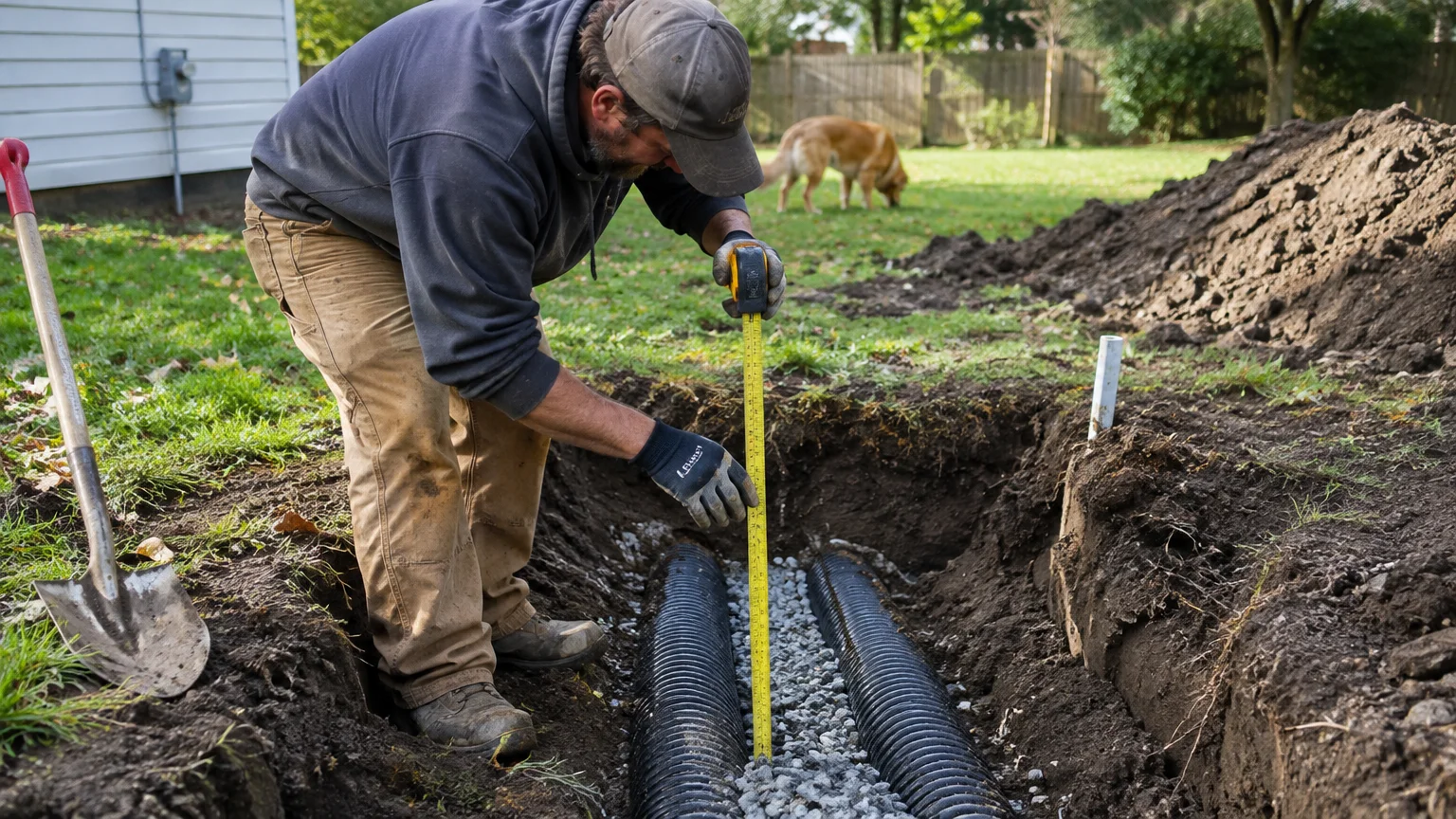
A drain field is often placed in a shallow soil layer. There is no single depth for every home, though. The field needs enough good soil below the trenches to treat wastewater. It must also stay above groundwater, hard soil, and shallow rock.
The number alone is not the main concern. The soil below the field matters most. A shallow field can work well when the soil drains properly. A deeper field may fail when water reaches groundwater too soon or meets a tight soil layer.
Why the soil absorption area is usually shallow
The soil absorption area needs air, healthy soil, and safe water flow. A shallow layout can help wastewater spread through the right treatment layer. It can also make inspections and repairs easier.
The field may be under grass, mulch, or a thin layer of topsoil. Do not cover it with a driveway, shed, pool, or heavy fill unless the plan allows it. Added soil changes water flow and can make the field too deep.
A lawn may show only small clues. Some fields have raised trench lines, while others look level. Green grass, soft soil, or early snow melt may point to buried pipes. These signs do not prove the exact depth.
How drain field depth differs from septic tank depth
A septic tank is a sealed container where wastewater sits and solids settle. The drain field is a wider soil area connected to the tank. The tank may sit deeper for cover and support, while the field often uses shallow trenches or chambers.
Do not assume the drain field is beside the tank. The tank may be near the home, while the field reaches another part of the lot. The approved plan is the best first way to understand this layout.
What determines how deep a drain field should be?
Soil and site conditions guide drain field depth more than the home itself. Designers review soil type, drainage, groundwater, rock, slope, wastewater use, and system type. Local rules then guide the final design.
The same home may need a different field on another lot. Sand, clay, silt, gravel, and mixed soils handle water in different ways. The design must fit the soil on that property, not a general rule found online.
Soil type, drainage, and seasonal groundwater
Soil type affects how fast wastewater moves. Sandy soil may let water move quickly. Clay may slow it down. Fast flow can reduce treatment time, while slow flow can leave water near the surface.
Seasonal groundwater also matters. The water table may rise after heavy rain or during wet months. A field that looks dry in summer may face different conditions during a wet season. The design must protect the soil layer during those changes.
Shallow rock, hardpan, and packed fill can limit the field. Hardpan is a dense soil layer that slows water. A site worker may need to check several areas because soil can change across one property.
Local regulations and approved system design
Local health and environmental offices set septic rules for their areas. These rules may cover soil tests, setbacks, trench design, reserve areas, groundwater space, and permits. Rules can differ between counties and states.
An approved plan may show the tank, distribution box, trenches, reserve area, property lines, wells, and buildings. It may also show elevations and design notes. An old plan may not show later repairs or additions.
A Jacksonville property owner can ask the local office about septic records. Septic Tank Pump Jacksonville can also help Jacksonville homeowners understand what a plan may show before a site visit. Check records against the yard instead of trusting an old plan without review.
How does the drain field work below the soil surface?
The septic tank removes much of the solid waste before liquid leaves through the outlet. That liquid is called effluent. It flows to the drain field, where pipes, chambers, or another approved method spread it through the soil.
The drain field is not just a buried pipe that carries water away. It is a planned treatment area. The tank outlet, distribution box, lines, trench base, soil, and cover must all work together.
The role of trenches, pipes, and aggregate
Traditional systems often use perforated pipes in trenches with clean stone. The pipe releases effluent along the trench. Newer systems may use plastic chambers, drip lines, or pressure pipes.
Aggregate means clean stone or approved support material around a pipe. It gives wastewater space to spread and helps protect the pipe. Chambers create open space around the line without using the same amount of stone.
The approved design controls the system type. Do not add stone, extend a pipe, or connect a new line without approval. Small changes can send too much water to one part of the field.
How wastewater moves through the treatment area
Wastewater moves from the tank toward a distribution point. Gravity or a pump then sends it through several lines. The soil filters the water and helps natural organisms break down harmful material.
The field needs rest between flows. Extra water from roofs, sump pumps, irrigation, and runoff can overload it. Keeping clean water away from the field is a simple way to protect it.
Grass is often a good cover because it has shallow roots and helps stop erosion. Trees, deep-rooted plants, vehicles, and buildings can harm pipes or press on the soil. Keep the field open and safe from heavy use.
Can a drain field be too deep?
Yes. A drain field can be too deep if the trenches sit below good treatment soil or too close to groundwater, rock, or hardpan. More depth does not always mean better treatment. The right depth depends on the full soil profile.
Deep burial can make repairs harder. It may hide warning signs and raise the chance of damage during future work. Added fill can cause the same problem, even if the original field was placed correctly.
Why excessive depth can limit soil treatment
Wastewater needs the right soil conditions for treatment. If it reaches a limiting layer too soon, it may move sideways, collect, or reach groundwater too early. This can cause wet spots and system stress.
The field must also stay above the seasonal water table. When groundwater rises into the treatment area, wastewater has less room to move safely. Wet-season checks can matter on difficult sites.
Some approved systems are deeper than others. A raised system, mound, pressure system, or another design may help when natural soil is poor. Never create a deeper field by guesswork.
Signs that the installation depth may be unsuitable
Surface symptoms can point to a problem, but they do not prove the cause. A wet area may come from a broken water line, poor grading, rain, or field trouble. An inspection can help find the real cause.
Possible warning signs include:
- Grass that stays unusually green over one part of the field.
- Soft, wet, or muddy soil during normally dry weather.
- Slow drains or backups inside the home.
- Sewage smells near the field or distribution box.
- Wastewater coming up above trenches or chambers.
- Erosion, settling, or dips in the yard.
Take these signs seriously, especially when several happen together. Keep people and pets away from sewage on the ground.
How deep should drain field trenches be?
Trench depth changes with the system design, soil profile, local rules, and treatment method. Trenches are not sized only to fit a pipe. They must leave enough soil around and below the distribution area.
A trench may look simple from above. Its depth, width, spacing, pipe position, stone, cover, and slope all matter. A pressure system may use different dimensions from a gravity system. A chamber system may not use a stone trench at all.
Trench depth, width, and separation
Trench depth is the distance from the finished ground to the excavation. Width is the side-to-side space for the pipe or chamber. Separation means the space between trenches and nearby limiting features.
The finished ground level matters because later grading changes the cover. Adding soil raises the surface but does not move the trench. Removing soil can expose pipes and reduce protection from weather or damage.
Trenches should stay level or follow the approved grade. Uneven work can send too much wastewater to one section. That section may become overloaded while other areas stay underused.
Why trench dimensions vary by system type
Gravity systems depend on height and a steady grade. Pressure systems use a pump and small outlets to spread wastewater more evenly. Chamber systems provide open treatment space. Drip systems may use narrow tubing close to the soil surface.
The number of bedrooms, expected water use, soil flow rate, and available land can change the layout. A larger home does not always need deeper trenches. It may need more treatment space or another distribution design.
A professional should compare the field with the permit and plan. Changing trench size without approval can cause safety, legal, and performance problems. It may also use the reserve area needed for future repairs.
How can you find the depth of an existing drain field?
The safest way to find drain field depth is to begin with records. Then confirm the layout with careful locating. Avoid blind digging because pipes, utilities, tanks, and field lines may be nearby.
Depth may mean the ground to the trench, the trench bottom, or the pipe center. Read the plan carefully because people may use the word depth in different ways. A professional can help explain the measurements.
Reviewing permits, plans, and property records
The local permit office may have a septic permit, as-built drawing, repair record, or soil report. A closing file, inspection report, or former owner may also have useful papers. Plans can show the tank, distribution box, field lines, slope, and reserve area.
Records may be old or incomplete. Additions, repairs, new tanks, and unapproved work can change the layout. Treat a plan as a starting point, not proof that every buried part is still in place.
Keep copies of the records in a safe place. A simple sketch can show the tank, cleanouts, field, wells, buildings, and access path. Photos taken before yard work can help future owners understand the system.
Using careful site checks without damaging the system
A homeowner can walk the yard, review plans, check cleanout covers, and note changes in grass or soil. These steps do not require opening a tank or probing deeply. Follow local utility-marking rules before digging.
A septic worker may use locating tools, safe probes, inspection ports, or other methods. The method should fit the property and avoid broken pipes or covers. Keep heavy equipment away until the field is found.
The depth of one exposed pipe does not prove the depth of every trench. A field may follow a slope, and soil cover may change from one end to another. Several safe checks may be needed.
How do you locate the drain field on your property?
The drain field is often beyond the septic tank, in the direction of the outlet pipe and site plan. Its location depends on slope, soil, lot shape, and the approved design. It may sit beside the tank, behind the home, or elsewhere on the property.
Finding the tank first can help because the field usually connects to its outlet side. Still, older systems may have changed. Do not guess the field location from the home’s position alone.
Clues from the septic tank, plumbing, and landscape
The tank may have lids, risers, cleanouts, or a line leaving the building. A distribution box may sit between the tank and field. Straight rows, grass strips, and gentle ground changes can point toward buried lines.
Landscape clues may be easier to see after rain or during dry weather. One yard section may drain differently. Snow may melt sooner above warm lines. Grass may grow faster where moisture sits close to the surface.
These clues do not confirm the boundary. Irrigation, old repairs, grading, and natural soil changes can look similar. Use records and careful locating before digging, planting, building, or driving across the area.
Why professional locating may be safer than digging
Digging by guess can crush a pipe, expose sewage, damage the tank, or disturb the treatment soil. It may also harm underground utilities. A damaged field can be harder to restore than it is to locate safely.
Professional locating is wise before a deck, addition, fence, pool, driveway, drainage trench, or tree planting project. Tell the worker about planned work and provide every record you have.
Septic Tank Pump Jacksonville serves property owners in the Jacksonville area, including Riverside, Mandarin, nearby neighborhoods, and local communities. A clear plan helps protect the field and gives future workers safer information.
How do slope and distance affect drain field placement?
Slope affects whether wastewater can move by gravity or needs a pump. Distance affects the route from the tank and the space needed around wells, buildings, property lines, streams, and other features.
A field needs more than an empty part of the yard. It needs good soil, safe height, enough room, and access for inspection or repair. Local rules control many required distances.
Gravity flow, pressure distribution, and elevation
Gravity systems need the tank, distribution box, and field at useful heights. If the field is too high, a pump may be needed. If it is too low, water may move too quickly or collect in the wrong place.
Pressure distribution uses a pump and controlled outlets to spread wastewater across the field. This can help on sloped land or where gravity would not distribute flow well. Pumps need power, alarms, and regular care.
Surface water should move away from the field. Roof drains, paved areas, and swales should not send extra water toward the trenches. Wet soil has less space for wastewater and may fail sooner.
Required setbacks from wells, buildings, and boundaries
Setbacks help protect drinking water, buildings, nearby land, and the septic system. Exact distances depend on local rules and system type. A well, stream, wetland, building, property line, or road may limit the field location.
Do not copy a neighbor’s layout or use a general distance from the internet. Rules can change by county and system. The local permit office can explain which rules fit the property.
Setbacks also protect future access. A field may meet a minimum distance but still sit under a planned driveway. Keep the field and reserve area open for future work.
What problems can occur when a drain field is installed at the wrong depth?
The wrong depth can cause poor treatment, slow drainage, sewage surfacing, odors, and backups. The cause may also be soil failure, extra water, damage, or poor care. Confirm the problem before assuming depth is at fault.
A field can struggle when it is too shallow, too deep, uneven, covered with fill, or placed over poor soil. Heavy traffic can compact the treatment area. Roots can enter broken pipes, and stormwater can overload the soil.
Surface failures, odors, and slow drainage
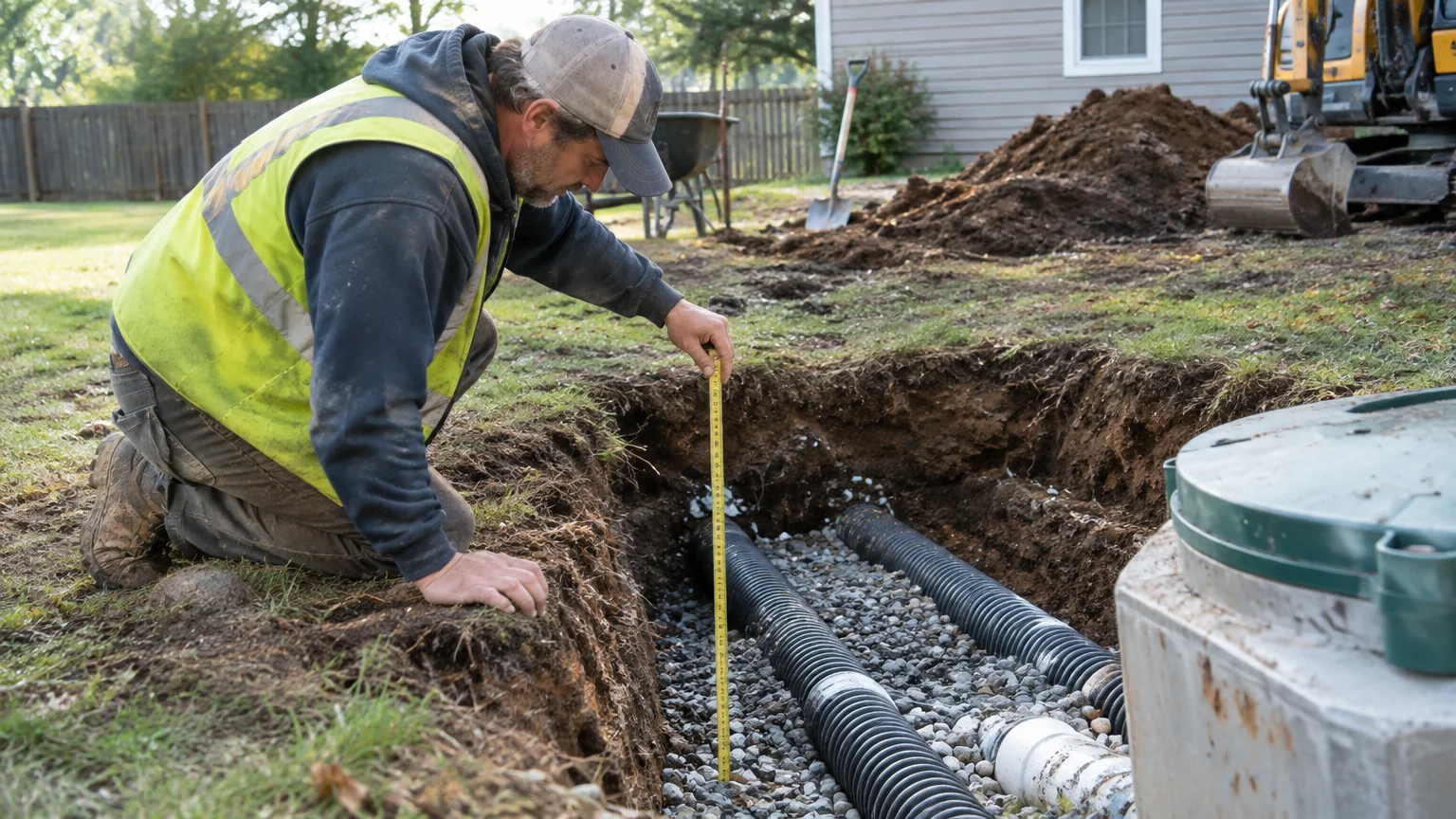
When water cannot move through the soil, it may collect near the surface or return toward the tank. Toilets and sinks may drain slowly. Wet ground or sewage smells may appear over the field or near the distribution box.
A failing field may have greener grass, standing water, or soft ground. These signs can be urgent when sewage is visible. Keep people and pets away, and do not cover the spot with more soil.
A blocked house line can look like field trouble. A full tank, broken outlet baffle, damaged distribution box, or failed pump can look similar. A full inspection helps separate these problems.
How pumping and maintenance relate to drain field health
Regular septic tank pumping removes settled solids before they leave the tank. The right schedule depends on tank size, household use, solids, and local advice. Pumping protects the field but cannot repair a failed field.
Homeowners can fix leaks, spread laundry across the week, keep grease out of drains, and avoid harmful disposal habits. Keep cars, sheds, and deep-rooted plants off the field. Send roof and sump water away from it.
Pumping does not make a field accept unlimited water. It does not replace an inspection when sewage surfaces or drains slow. Good care treats the tank, field, plumbing, and soil as one system.
How should you verify a drain field’s depth and condition?
Verify drain field depth through records, safe surface checks, and a qualified inspection when needed. The goal is to confirm the location, design, soil, and warning signs without damaging buried parts.
Useful records include the original permit, repair history, pumping records, site sketch, tank location, and known property changes. Photos of wet spots or other signs can help when conditions change.
What a property owner can document before an inspection
A short written record can make an inspection more useful. Note when slow drains began, where odors appear, and how rain changes the yard. Mark buildings, wells, driveways, fences, and planned projects.
Useful items include:
- Septic permits, plans, and inspection reports.
- Tank pumping dates and known repair work.
- Locations of lids, cleanouts, risers, and wet areas.
- Recent grading, landscaping, building, or irrigation changes.
- Household changes that may increase wastewater use.
- Photos from several angles during dry and wet weather.
Do not open a septic tank alone or enter one. Tanks can contain toxic gases and unsafe spaces. Surface notes are usually enough to begin a professional review.
When to contact a septic professional or local authority
Get help when the field cannot be found, the depth is unclear, sewage surfaces, a pump alarm sounds, or planned work may cross the field. The local authority may handle records, permits, repairs, or failed-system reviews.
Ask what will be checked and which records are needed. An inspection may include the tank, outlet, distribution box, field surface, pump, soil, and nearby water flow. The exact work depends on the concern.
Septic Tank Pump Jacksonville helps property owners review drain field questions. Contact us to discuss the field’s location, depth, or condition before repair or property work.
Frequently Asked Questions
Is a leach field the same as a drain field?
Yes. Leach field and drain field are common names for the soil treatment area of a septic system. Some people also spell it leech field. The approved plan may use another name, such as soil absorption field.
Can a homeowner dig to find a drain field?
A homeowner can review records and study surface clues. Blind digging is risky, though. It may damage pipes, utilities, tanks, or treatment soil. Careful locating is safer before construction, planting, grading, or driveway work.
How deep should a septic tank be compared with its drain field?
A septic tank and drain field can sit at different depths and heights. The tank needs cover and a safe connection to the home. The field needs suitable soil below the trenches. The approved plan is the best way to compare them.
Who can perform a perc test?
A perc test, short for percolation test, checks how fast water moves through soil. A qualified site evaluator, soil worker, engineer, or other approved person may perform it. The local health office can explain who is allowed to test that property.
How can someone locate a septic tank and drain field?
Start with permits, property records, cleanouts, tank lids, and the pipe route from the building. Grass and soil clues may help but do not confirm the layout. Professional locating is safer when records are missing or construction may harm buried parts.
Key Takeaways
- Drain field depth depends on soil, groundwater, slope, design, and local rules.
- A leach field is usually a shallow soil treatment area, not just a buried pipe.
- Added fill, digging, vehicles, roots, and stormwater can harm the field.
- Records and careful locating are safer than guessing and digging.
- Pumping protects the tank and field but cannot repair every field problem.
Conclusion
The answer to how deep is a drain field depends on soil, water, design, and the approved plan. A shallow field may work well when the soil gives enough treatment space. A deeper field may fail when it reaches groundwater, rock, or another limiting layer.
Start with permits, site plans, surface clues, and pumping records. Avoid blind digging, heavy traffic, deep-rooted plants, and extra water near the field. When the layout or condition is unclear, a qualified septic worker can check it safely.
Septic Tank Pump Jacksonville helps property owners understand septic tank and drain field concerns. Contact us today to discuss your drain field before it becomes a larger problem.