The answer to how long does it take to install a septic system depends on the land, soil, design, permits, and weather. Digging may take only a few days on a ready site. Planning, inspections, approvals, and lawn repair often take much longer. Jacksonville property owners should plan for several steps.
Table of Contents
- How long does it take to install a septic system?
- What needs to happen before septic system installation?
- What happens during septic system installation?
- How do the septic tank and drainfield work together?
- What can delay a septic system installation?
- What should property owners expect after installation?
- What are common misconceptions about septic installation timelines?
- Frequently Asked Questions
How long does it take to install a septic system?
A septic system may take several weeks or longer from the first site visit to final approval. The digging and main installation may take only a few days when the site is ready. Soil tests, system plans, permits, contractor schedules, inspections, and weather can add more time.
A septic system is a private wastewater system. It treats household water when a property does not connect to public sewer lines. Most systems include a tank, pipes, a drainfield, and soil that helps treat liquid waste. The setup must fit the property and Florida rules.
The usual process includes these steps:
- The owner arranges a site review and soil testing.
- A designer chooses a system for the soil and expected water use.
- Plans go to the local health department or another authority.
- A contractor schedules the work after approval.
- The tank, pipes, and drainfield are installed.
- An inspector checks the work before the system is covered.
- The crew restores the ground and shares care instructions.
Some lots have easy soil and good equipment access. Others need a raised, pressure, or alternative system. A large rural property may also need longer pipes and more site work. Septic Tank Pump Jacksonville helps Jacksonville property owners understand which steps need careful planning.
Typical timeline from planning to final approval
Planning often takes longer than digging. A complete application, clear property records, and quick answers can help the project move forward. Missing details may send the plan back for changes.
The physical work cannot always start when an owner is ready. The permit, design, contractor schedule, equipment, and site conditions must all line up first. Final approval may also depend on an inspection after the work is complete.
Why installation schedules vary by property
No two lots are exactly alike. Soil depth, slopes, groundwater, rock, trees, driveways, and property lines all affect the plan. A buyer or investor should ask for the approved plan and inspection records before setting a move-in date.
A septic tank replacement may follow a different schedule from a new system. The old tank, existing pipes, soil, and drainfield may need review first. A professional can explain whether parts of the old system can remain.
What needs to happen before septic system installation?
Before work begins, the property needs a site review, soil testing, system design, permits, and a work schedule. These steps show where the system can go and what type of system the land can support. Skipping a step can lead to delays, failed inspections, or later system trouble.
A site review looks at the full lot. The reviewer may check slopes, wells, streams, buildings, driveways, property lines, and room for a future replacement drainfield. The goal is to place the system safely and follow local rules.
Soil testing checks how well the ground can accept and treat wastewater. Slow soil, shallow rock, or a high water table may require another design. A drainfield is the area that receives liquid from the tank and spreads it through the soil.
Site evaluation, soil testing, and system design
The designer uses the site results to choose the tank size, pipe layout, drainfield area, and needed pumps. The plan must match the home, expected water use, and local rules. A large home or business may need a different plan than a small house.
Owners should share future plans early. A new bedroom, pool, addition, driveway, or detached building may affect the layout. Changing the property after approval may require a new plan or another review.
Permits, approvals, and contractor scheduling
Most septic projects need approval before earthwork starts. The exact office and process vary by county and state. Jacksonville owners should confirm local rules instead of relying on a neighbor's project.
A contractor can often schedule the job after the permit is ready, the design is approved, and the site is accessible. Keep the soil report, approved plan, permit, inspection notes, and tank details together. These records help future owners and service workers.
What happens during septic system installation?
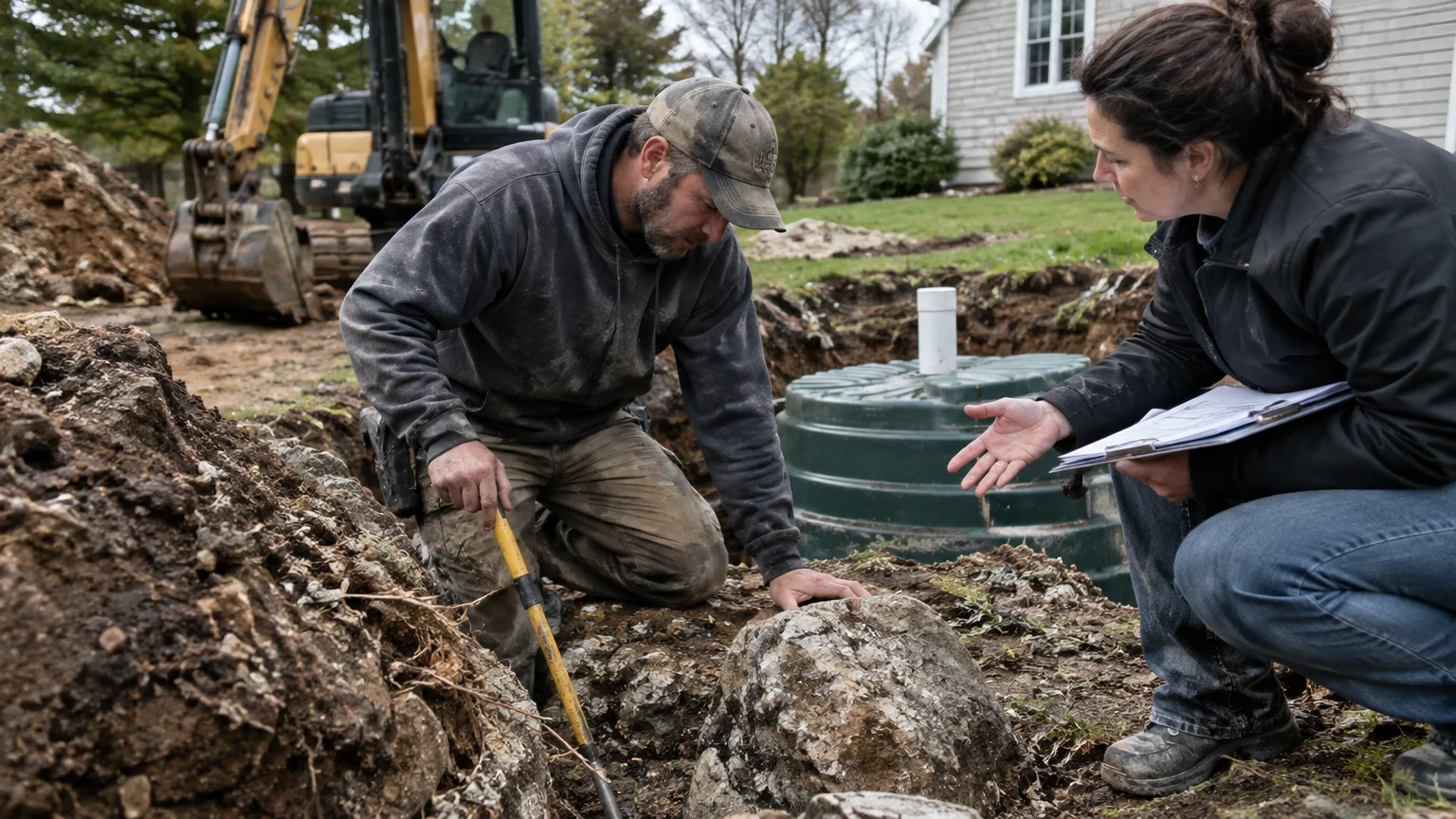
During installation, the crew marks the approved layout, digs the work areas, places the tank, installs pipes, builds the drainfield, and completes required tests. The work must follow the approved design. The crew should not move major parts just because another spot looks easier.
The first step often includes marking underground utilities and the system layout. Excavators then prepare the tank area and drainfield. The tank must sit on stable ground and at the approved depth. Pipes need the right slope or pressure controls.
The tank connects to the building sewer pipe. Heavy solids settle inside the tank, while lighter material floats. Liquid leaves through an outlet and travels toward the drainfield. Some systems use a pump to move liquid to higher ground.
Excavation, tank placement, and drainfield construction
The crew must protect the tank, pipes, and drainfield from heavy equipment. The drainfield should not be used for parking or storage. Deep-rooted plants should also stay away from this area.
After the inspector checks the open work, the crew can cover the system and shape the ground. The surface may look rough at first. Soil can settle after rain, so owners should follow instructions for grass, traffic, and surface water.
How the septic system components connect
Wastewater moves from the home's plumbing through an inlet pipe to the tank. Liquid then leaves through an outlet pipe or pump. It may pass through a distribution box before entering the drainfield and nearby soil.
Access lids allow inspection and maintenance. Pumps and distribution boxes help move or divide wastewater in systems that need them. Knowing where these parts are helps families, tenants, buyers, and future service workers.
How do the septic tank and drainfield work together?
The tank and drainfield have different jobs, but they must work as one system. The tank slows wastewater so solids settle and floating material stays inside. The drainfield spreads the liquid part into soil for more treatment.
Water from sinks, toilets, showers, and laundry flows through the building sewer pipe. Heavy solids form sludge at the bottom of the tank. Grease and other light material form a scum layer near the top. The middle liquid layer moves toward the outlet.
Baffles or outlet devices help keep sludge and scum inside. An effluent filter may also help protect the drainfield. These parts need inspection and cleaning during normal septic care.
How wastewater moves through the system
The drainfield receives liquid in measured amounts. A distribution box may divide the flow among several trenches. Some systems use a pump and controls to send water to the field. The design decides how much each area receives.
A healthy system needs normal water use. Leaking toilets, long showers, and several laundry loads at once can send too much water to the field. Spread laundry through the week to reduce strain on the system.
How soil treats and filters wastewater
Soil provides a final treatment layer. Tiny spaces let liquid move while holding back many harmful particles. Soil organisms help break down some waste as liquid travels downward.
The drainfield needs air, space, and stable soil. Compacted ground, standing water, roots, and heavy vehicles can reduce performance. Keep the field clear and direct roof water away from it.
What can delay a septic system installation?
Weather, soil, access, permits, materials, and design changes can delay the job. Rain may make the ground too soft for safe equipment use. Storms, frozen ground, or high groundwater may also pause work.
Rock, hard clay, shallow soil, and steep slopes can slow excavation. A narrow driveway or fence may limit equipment access. Before work begins, owners should clear the approved route and tell the contractor about gates, pets, wells, buried lines, and planned construction.
Weather, soil conditions, and site access
A crew may wait until the site can support heavy equipment without damage. Wet soil can harm the drainfield and create a poor base for the tank. A safe delay is better than rushing work that may fail early.
The crew may also find conditions that were not clear during the first review. Unexpected rock or groundwater may require a design change. Ask what changed, why it matters, and whether new approval is needed.
Permit changes, material availability, and design revisions
A local authority may request more information or corrections. A change in the home plan can affect tank size or drainfield area. Material delivery and equipment availability may also affect the start date.
Keep one current plan to reduce confusion. Do not hire separate crews to change the layout without written approval. Septic Tank Pump Jacksonville can explain what Jacksonville homeowners should keep for future septic tank pumping and repair visits.
What should property owners expect after installation?
After installation, the system usually needs an inspection before the work is fully covered or approved. The owner should receive records showing the layout, tank location, care needs, and final approval. The ground may need time to settle and grow new grass.
The inspector checks whether the work matches the approved plan. This may include tank placement, pipe connections, access openings, drainfield construction, and other details. The local authority decides the exact inspection steps.
Inspections, final approval, and restoring the property
Owners should not cover open work unless the inspector allows it. Photos can help show where buried parts are located, but photos do not replace approval. After inspection, the crew can backfill and grade the area.
Keep vehicles and heavy loads away from the drainfield. Surface water should flow away from the system. Grass is usually better than trees, deep shrubs, sheds, or concrete. The approved plan and contractor instructions always control.
Initial use, maintenance records, and septic tank pumping
A new system still needs careful use. Fix leaks, avoid flushing wipes and grease, and use water wisely. Only toilets, wastewater, and normal household waste should enter the system.
Septic tank pumping removes built-up sludge and scum. The right schedule depends on tank size, household use, solids levels, and local guidance. A service provider can inspect the tank and record the work. Owners should learn where the lids and drainfield are before an urgent problem occurs.
What are common misconceptions about septic installation timelines?
Some people think installation starts when the excavator arrives. In fact, the process may begin with property research, soil testing, design work, and permits. Another mistake is assuming every property can use the same tank and drainfield layout.
Some owners also think the tank is the whole system. It is only one part. Pipes, distribution equipment, the drainfield, soil, access points, and a care plan all matter.
Why the digging is not the only part of the process
Earthwork may look like the main task, but the system must first be approved and then inspected. A crew can dig quickly and still need time to place materials correctly, protect the field, complete tests, and restore the land.
Visible work does not show every part of the project. Much planning happens before equipment arrives. Clear questions and complete records help owners understand each stage.
When to contact a septic professional for a project timeline
Contact a professional when a property needs a new system, an old system is failing, a building plan changes, or records are missing. A first-time buyer should ask for the approved design and recent inspection details before closing.
Homeowners do not need a professional for every task. They can find access lids, protect the drainfield, fix simple water leaks, and keep basic records. Excavation, tank placement, electrical work, soil testing, and system design need qualified professionals.
Key takeaways
- Planning, permits, and soil conditions often control the full timeline.
- Physical installation may take less time than approval.
- The tank, pipes, drainfield, and soil must work together.
- Weather, access, rock, groundwater, and design changes may cause delays.
- Keep the approved plan and service records for future care.
Conclusion
The best answer to how long does it take to install a septic system comes from the property plan. A clear site review, approved design, ready work area, and timely inspection can help the job move smoothly. Septic Tank Pump Jacksonville helps property owners understand installation and ongoing care.
Contact us to discuss septic system planning, installation questions, or future maintenance needs.
Frequently Asked Questions
How deep should a septic tank be?
A septic tank should be installed at the depth shown in the approved design. Depth depends on the building sewer pipe, tank shape, soil, access needs, and local rules. The lids must stay reachable for inspection and pumping. Never bury or move them without professional guidance.
How far does a septic tank need to be from a house?
The needed distance depends on state and local rules, site conditions, wells, property lines, water features, and the approved design. A septic professional or local health authority can confirm the setback for a property. The tank also needs safe access for inspection and septic tank pumping.
How does a septic system work?
Wastewater flows from the home into a septic tank. Solids settle, lighter material floats, and the middle liquid layer moves to the drainfield. The drainfield spreads that liquid through soil, where natural filtering and soil organisms provide more treatment. Normal water use helps the system handle household flow.
How can someone find a septic tank lid?
The approved septic plan is the best starting point. If records are missing, follow the building sewer line from the house, look for ground markers, or ask a professional to locate the tank. Dig carefully because buried utility lines and tank parts may be nearby.
Who installs septic tanks near me?
A licensed or qualified septic installer familiar with local rules should handle tank installation. The owner should confirm credentials, permits, insurance, inspection steps, and experience with the planned system. Septic Tank Pump Jacksonville can help property owners understand the next step for a septic project.
If you are not sure what you are dealing with, it is worth having someone look at it before it turns into a bigger job. Get in touch with Septic Tank Pump Jacksonville today and we will tell you where you stand.