The answer to how deep is a leach field depends on the soil, groundwater, slope, and approved septic plan. Many systems use shallow trenches with pipes and stone below the soil. The exact depth can vary greatly. Jacksonville property owners should check records and arrange a site review before digging, planting, or building.
A leach field is also called a drainfield or septic system drain field. It receives liquid wastewater from the septic tank. Soil then helps filter that water before it moves into the ground.
Depth matters for many home projects. It can affect digging, planting, drainage, repairs, septic pumping, and new construction. A lawn may look clear while pipes sit just below the surface.
Table of Contents
- How deep is a leach field?
- What determines how deep a leach field should be?
- How much soil cover should be over a leach field?
- Are leach fields installed at different depths?
- How can you find the depth of a leach field on your property?
- What should you avoid doing over a leach field?
- When should a professional inspect or locate a leach field?
- Frequently Asked Questions
How deep is a leach field?
A leach field is often placed in shallow trenches below the yard. Still, no single depth works for every septic system. The pipe, stone or chamber, soil cover, and natural soil layers all affect the final depth.
The best answer for a homeowner is simple: the field must protect the pipes and use soil that can treat wastewater. It should not sit so deep that water cannot move through the soil. Local rules and the approved site plan decide the final design.
Typical trench depth and soil cover
A standard field may have pipes above stone or inside plastic chambers. Soil covers the system after installation. The yard may look flat, even when pipes follow a planned path below it.
The distance from the grass to the pipe is not always the same as the trench depth. The trench depth includes the space below the pipe. A permit drawing may show both the trench depth and the finished soil cover.
Why leach field depth is not one fixed number
A leach field must work with the soil below it. That soil needs enough room to accept and treat wastewater. Clay, rock, or high seasonal groundwater can limit where workers place the field.
Some people spell the word as “leech,” especially when searching online. Leach field is the standard term for this septic part. A drainfield may be shallow, raised, or built with another approved design. The site review gives the right answer for each property.
What determines how deep a leach field should be?
Soil and groundwater are two main factors that guide field depth. The design must leave enough good soil below the pipes. It must also keep wastewater away from groundwater and other protected areas.
A perc test, or percolation test, checks how fast water moves through soil. A septic designer or local agency may help arrange the test. The result is only one part of the review. Soil type, slope, groundwater, rock, and the planned building also matter.
Soil type, seasonal groundwater, and restrictive layers
Sandy soil may let water move quickly. Clay may hold water and drain slowly. Neither result alone decides the best depth. The system needs both water movement and natural treatment.
Groundwater can rise during wet weather. A field that seems suitable during a dry visit may have less usable soil later. Dense clay or bedrock can also limit the space below the field.
Slope, site layout, and available usable soil
Slope affects how wastewater travels through pipes. It also affects how workers divide the field. A level lot may suit a gravity layout, while a sloped lot may need a pump or raised design.
The field must fit around the home, well, property lines, driveways, trees, and drainage areas. Setbacks vary by local rule. Property owners in Jacksonville should use approved plans instead of copying a nearby system.
How much soil cover should be over a leach field?
A leach field needs enough soil to protect its pipes and treatment area. It also needs soil that allows air and water to move. The right cover depends on the system design, local rules, and parts used above the pipes.
Too little cover may leave pipes open to damage from tools, animals, weather, or traffic. Too much cover may reduce air movement, change drainage, and add weight. It may also make the field harder to inspect.
Balancing protection, drainage, and oxygen flow
Healthy soil has small air spaces. These spaces help natural processes treat wastewater. Packed soil removes those spaces and may slow water movement.
The finished yard should send rain away from the field. Gutters, downspouts, swales, and yard drains may need to direct water elsewhere. Adding soil without checking the plan can change how water reaches the system.
Why too little or too much cover can cause problems
A thin cover can leave the system open to damage. A thick cover can bury access points and make service harder. It may also add pressure to pipes or chambers that cannot carry heavy loads.
Do not use a tractor, dump truck, or other heavy machine over the field without guidance. One trip can pack the soil or damage buried parts. Keep the yard close to the approved finished grade.
Are leach fields installed at different depths?
Yes. Leach fields can have different depths and layouts. Soil, groundwater, lot shape, wastewater flow, and local approval all guide the design. A standard septic system drain field is only one possible type.
The terms shallow, raised, mound, and pressure-dosed describe systems made for different site limits. They do not mean one system always works better. Each system must match the property and its care plan.
Conventional trenches, beds, and shallow systems
A trench system places pipes or chambers in separate narrow runs. A bed system uses one wider area. Both spread wastewater through prepared soil, but their shapes and flow patterns differ.
A shallow system may work where good soil starts close to the surface. It needs careful grading and protection from traffic. Its access points may be easier to find, but digging near them can still damage the field.
Raised, mound, pressure-dosed, and alternative systems
A raised or mound system adds suitable soil above the natural ground. This can help when natural soil is too shallow or groundwater is too close. The field may look like a gentle rise in the yard.
A pressure-dosed system uses a pump to send wastewater in measured doses. Other systems may use filters, treatment units, or other approved parts. Their depth and care needs may differ from a basic gravity system. Septic Tank Pump Jacksonville can help Jacksonville property owners understand which type may be on the site before work begins.
How can you find the depth of a leach field on your property?
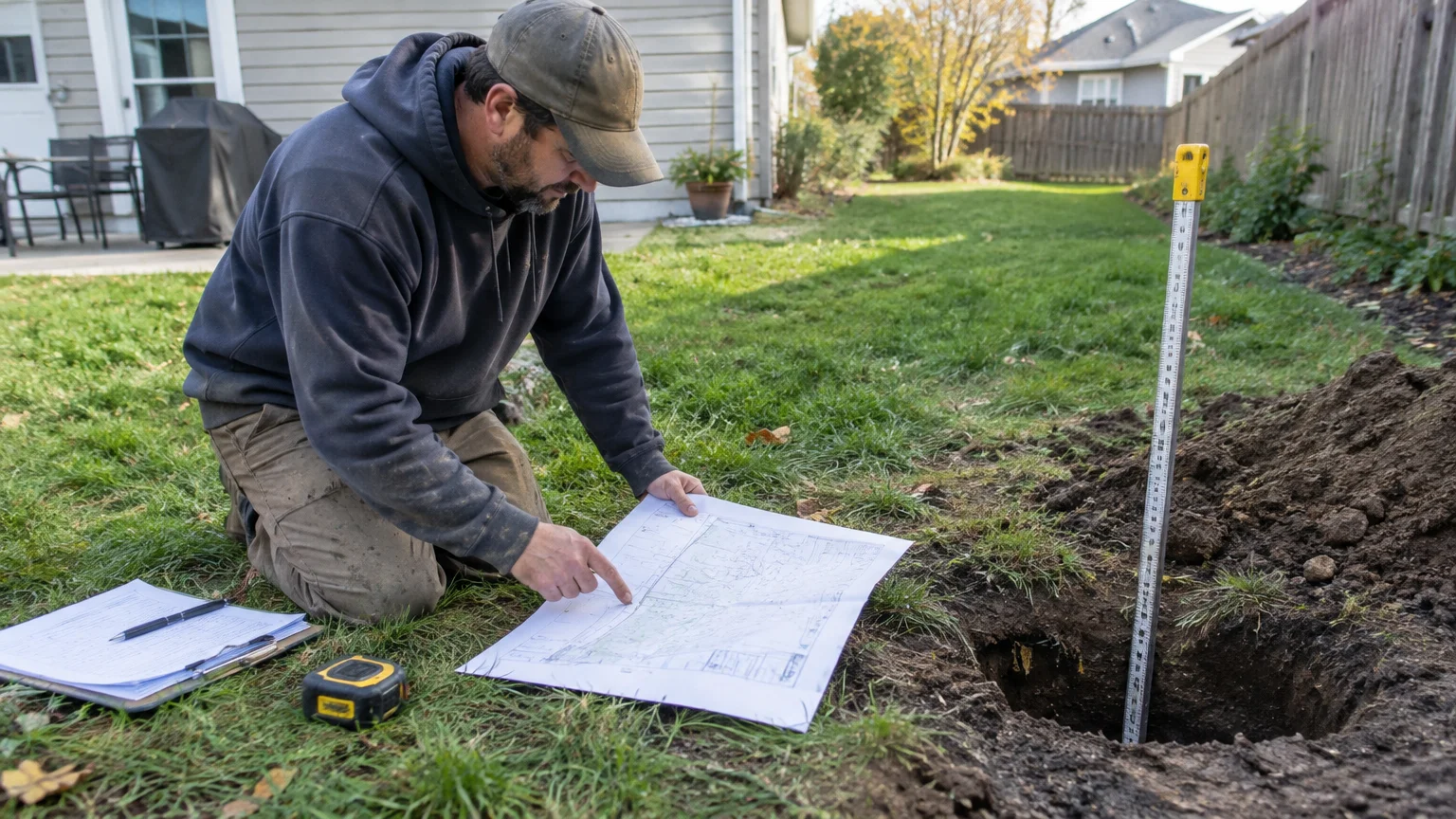
The safest way to learn how deep is a leach field is to start with records. Then confirm the layout in the yard. A permit, as-built drawing, or septic inspection report may show the tank, pipes, field, and finished grades. Records are safer than guessing from grass color or ground shape.
Collect documents before you dig. Useful records may come from the county health office, building office, former owner, installer, or property manager. Access rules differ by county and state.
Checking permits, as-built drawings, and property records
An as-built drawing shows what workers installed and where it sits. It may show trench lengths, elevations, pipe paths, tank size, and distances from fixed points. Older drawings may be less exact after landscaping or remodeling.
Compare the drawing with the current property. Additions, patios, driveways, fences, and grading may have changed the yard. If no plan exists, a local septic professional may use safe methods to locate the system.
Using inspection access points and careful surface clues
Tank lids, risers, cleanouts, and distribution boxes can offer useful clues. A distribution box sends wastewater into separate field lines. It may sit between the tank and the field.
Other clues may include a low mound, greener grass, uneven settling, or cleanouts in a line. These signs do not prove depth or location. Never probe with a metal rod or dig blindly near buried pipes. Before building or landscaping, have the field marked by someone who knows septic layouts.
What should you avoid doing over a leach field?
A leach field should stay open, lightly used, and free from extra water. Grass or another approved shallow cover is often safest. Keep vehicles, buildings, pools, sheds, and heavy loads away from it.
Protect the field from grade changes and deep roots as well. A small yard project can block air, add weight, or send stormwater into the trenches. Check the permit before changing the ground.
Landscaping, structures, vehicles, and heavy equipment
Deep-rooted trees and large shrubs may grow into pipes or chambers. Concrete, asphalt, and patios can block air and make repairs harder. Sheds, play equipment, and parked vehicles can pack the soil.
Homeowners can usually mow with light equipment and remove invasive plants. They should keep access lids easy to see. Digging, grading, pipe repair, and system changes need greater care.
Drainage changes, irrigation, and deep-rooted plants
Sprinklers should not soak the field. Roof water should not drain over it. French drains, retaining walls, and landscape berms can change the way water moves through the soil.
Avoid planting trees close to the field unless a septic professional approves the choice. Also avoid adding soil, removing soil, or placing deep mulch over the system. These changes can hide warning signs and alter field conditions.
When should a professional inspect or locate a leach field?
Arrange help before excavation, construction, grading, major planting, or a property transfer. Help is also wise when you notice sewage smells, wet spots, slow drains, wastewater in the yard, or very green grass over one area.
A septic professional can locate key parts, review access points, check flow, and look for saturation or damage. The inspection does not replace local records or permits. It adds a site check to the information already available.
Warning signs of depth, drainage, or distribution problems
Watch for these signs:
- Wet soil that stays damp while nearby ground is dry
- Sewage smells near the tank or drain field
- Slow drains throughout the home
- Wastewater surfacing or pooling in the yard
- Grass that grows much greener over one field area
- Soil settling, erosion, or exposed pipes
One sign does not prove the field has failed. Rain, blocked plumbing, a full tank, or a broken pipe can cause similar symptoms. A prompt inspection can help find the real cause.
What to confirm before repairs, construction, or septic pumping
Before work starts, confirm the tank location, field limits, pipe direction, access points, and approved grades. Share records about past repairs, additions, pumps, alarms, and unusual water use.
Septic tank pumping removes solids from the tank, but it does not fix a damaged drain field. It can still be an important part of system care when guided by the tank design, household use, and professional advice. Septic Tank Pump Jacksonville serves property owners across Jacksonville, including Riverside, Mandarin, and nearby communities. The team can help determine what septic attention the property may need.
Frequently Asked Questions
How deep should a septic tank be?
A septic tank may sit at different depths based on its location, soil cover, access needs, and local approval. The tank should stay reachable for inspection and pumping. Use the permit or as-built drawing instead of guessing from the yard. A riser may keep the lid closer to the surface.
What is a septic system?
A septic system treats wastewater on the same property where it is made. It usually includes a tank, pipes, and a leach field. Solids settle in the tank, while liquid moves toward the field for soil treatment. Pumps, filters, alarms, and treatment units may be part of some designs.
Who performs a perc test?
A qualified soil professional, septic designer, engineer, or other approved specialist may perform or arrange a perc test. The exact rule depends on the state and county. The local health office can explain who may do the work. The test checks soil drainage but is not a full septic inspection.
How far does a septic tank need to be from a house?
The required distance depends on local rules, site conditions, and the approved septic plan. Setbacks may also apply to wells, property lines, streams, driveways, and other buildings. Check with the local permit office before moving or installing a tank.
How do you spell cesspool?
The standard spelling is cesspool. A cesspool is not the same as a modern septic tank and approved leach field. It is an older underground wastewater structure that may not meet current rules. Ask the local authority about the system type before planning repairs.
Key Takeaways
- Leach field depth depends on soil, groundwater, slope, and system design.
- Pipe depth and trench depth are two different measurements.
- Permits and as-built drawings are the best places to start.
- Keep vehicles, buildings, deep roots, and extra water away from the field.
- Professional locating is wise before digging, building, or changing grades.
Conclusion
The question how deep is a leach field has no single answer for every property. A standard field may be shallow, while a mound or pressure-dosed system may use another layout. Soil, groundwater, local rules, and the approved design decide the proper placement.
Start by finding permits, drawings, tank access points, and past inspection records. You can usually mow the area with light equipment and keep heavy loads away. Digging, grading, locating buried lines, and checking wet areas need careful work.
Septic Tank Pump Jacksonville helps property owners understand septic system needs. Jacksonville homeowners can Contact us to arrange help locating, checking, or maintaining a leach field before a property project.
If you are not sure what you are dealing with, it is worth having someone look at it before it turns into a bigger job. Get in touch with Septic Tank Pump Jacksonville today and we will tell you where you stand.