The answer to what size septic tank for 3 bedroom house depends on local rules, water use, and site conditions. Many homes use a mid-size residential tank, but the approved size can differ. Permits, property records, and a site check give the safest answer for each home in Jacksonville.
A septic tank is more than a buried box. Its size affects the whole septic system. A tank that is too small may need septic pumping more often. A larger tank may not fix poor soil, a blocked pipe, or a failing drainfield.
Septic Tank Pump Jacksonville helps property owners review the records and questions that matter before septic work begins. The goal is to match the home, land, and local rules instead of making a guess.
Table of Contents
- What Size Septic Tank Does a 3 Bedroom House Need?
- How Is Septic Tank Size Determined for a Three Bedroom Home?
- Can a Three Bedroom House Need a Larger Septic Tank?
- What Is the Difference Between Septic Tank Size and Drainfield Size?
- How Deep Is a Septic Tank for a Three Bedroom House?
- How Can You Check the Septic Tank Size on Your Property?
- What Should You Confirm Before Installing or Replacing the Tank?
- Frequently Asked Questions
- Key Takeaways
- Conclusion
What Size Septic Tank Does a 3 Bedroom House Need?
A three-bedroom home often needs a tank sized for its approved bedroom count and expected water use. The exact capacity is not the same for every home. The local health department, soil report, permit, and system plan may set the final size.
Bedroom count helps officials plan for possible use. It does not always show how many people live in the home today. A spare room may sit empty, but local rules may still count it as a bedroom. This protects the system if the home changes owners later.
A septic tank holds wastewater while solids settle and light waste rises. The liquid then moves toward the drainfield. A larger tank gives wastewater more holding space, but it cannot repair poor soil, a broken pipe, or a failing drainfield.
Sizing rules can vary in Florida and around Jacksonville. Some areas focus on bedroom count. Others also review daily flow, plumbing fixtures, soil findings, and the type of treatment system. A septic tank replacement may need to follow current rules, even if the old tank met past rules.
A general size is only a starting point. Check the approved permit before ordering a tank. Septic Tank Pump Jacksonville helps Jacksonville property owners understand which records and site details to review first.
How Is Septic Tank Size Determined for a Three Bedroom Home?
Septic tank size usually depends on bedroom count, expected wastewater flow, and local rules. Designers may also review the plumbing layout, soil, slope, and planned drainfield. The approved design matters more than a general rule found online.
Bedroom count helps estimate possible occupancy. Water flow includes use from toilets, showers, sinks, laundry, and other fixtures. A home with many residents may put more demand on its system than a home with only one or two residents.
Local officials may set a minimum tank capacity for a three-bedroom home. They may also ask for a permit, soil test, site plan, or inspection. These steps help show that wastewater can be treated safely on the property.
A perc test, or percolation test, checks how fast water moves through soil. It may help with septic planning, but it does not set the tank size by itself. Soil depth, groundwater, slope, and other site facts also matter.
A licensed designer, installer, or local permit office can explain the rule for one property. A homeowner can gather records and count the bedrooms. Digging near a buried tank or changing the system should be left to trained workers.
Can a Three Bedroom House Need a Larger Septic Tank?
Yes, a three-bedroom house may need a larger tank when water use, fixtures, additions, or site conditions create more demand. The bedroom label is only one part of the design. A professional should review changes before the system is altered.
A larger tank may be considered when many people live in the home. Frequent laundry, long showers, large tubs, and busy kitchens can also add flow. Water-saving fixtures may lower use, but they do not replace proper design.
Home additions need careful review. Turning an attic, basement, garage, or office into a bedroom may change the approved system load. Adding bathrooms or rental space may also affect permits and drainfield needs.
Common items to review include:
- Added bedrooms or sleeping rooms
- New bathrooms, tubs, or laundry areas
- Large households or frequent guests
- High-use appliances and fixtures
- A home business or separate living space
A larger tank is not always the right answer. If wastewater leaves the tank slowly, the drainfield may be the main concern. If solids enter the drainfield, pumping, cleaning, or repairs may be needed. A careful check helps separate a tank problem from a soil or pipe problem.
Do not assume that a larger replacement tank is always allowed. Septic Tank Pump Jacksonville helps homeowners, including Riverside, Mandarin, and nearby communities, prepare questions for the inspection and permit process.
What Is the Difference Between Septic Tank Size and Drainfield Size?
The septic tank stores and separates wastewater. The drainfield receives the liquid and lets the soil finish the treatment process. These are different parts of one system. A larger tank does not mean the property can support a larger home.
Inside the tank, heavy solids settle as sludge. Grease and other light waste rise as scum. The clearer liquid between these layers flows toward the drainfield. Baffles or filters help stop unwanted solids from leaving the tank.
The drainfield has buried trenches, chambers, or other approved parts. It spreads liquid into the soil. Soil type, usable space, groundwater, slope, and setbacks can affect its size and location.
A property may have a tank that suits three bedrooms but a drainfield that cannot support an addition. The reverse can also happen. A good tank cannot make shallow soil deeper or make a wet area safe for wastewater treatment.
Many sites also need room for repairs or replacement. This space is often called a reserve area. A site plan may show the tank, drainfield, property lines, wells, buildings, and other features.
Signs of a failing system may include slow drains, sewage odors, wet ground, or very green grass near the drainfield. These signs need quick attention. Keep children and pets away from sewage or dirty standing water.
How Deep Is a Septic Tank for a Three Bedroom House?
There is no single depth for a tank serving a three-bedroom home. Installation depth depends on the home’s pipe height, tank design, soil, groundwater, access needs, and local rules. The tank must remain reachable for inspection and pumping.
The building sewer must usually flow toward the tank at the correct slope. This affects the inlet height. The outlet must then connect to the distribution box, pump tank, or drainfield at the approved level.
Soil and groundwater also matter. A high water table may limit how deep the system can sit. Rock, steep land, poor soil, or shallow usable soil may require another design. An engineered system may be needed at a difficult site.
Access matters as much as depth. The lid should stay easy to find and safe to reach. Burying it too deeply can make future checks harder. It may also raise the chance of damage during later digging.
A homeowner can look for a riser, lid, cleanout, or old service marker without digging. Check for underground utilities before any digging. A professional can confirm the tank location and depth with safe tools.
How Can You Check the Septic Tank Size on Your Property?
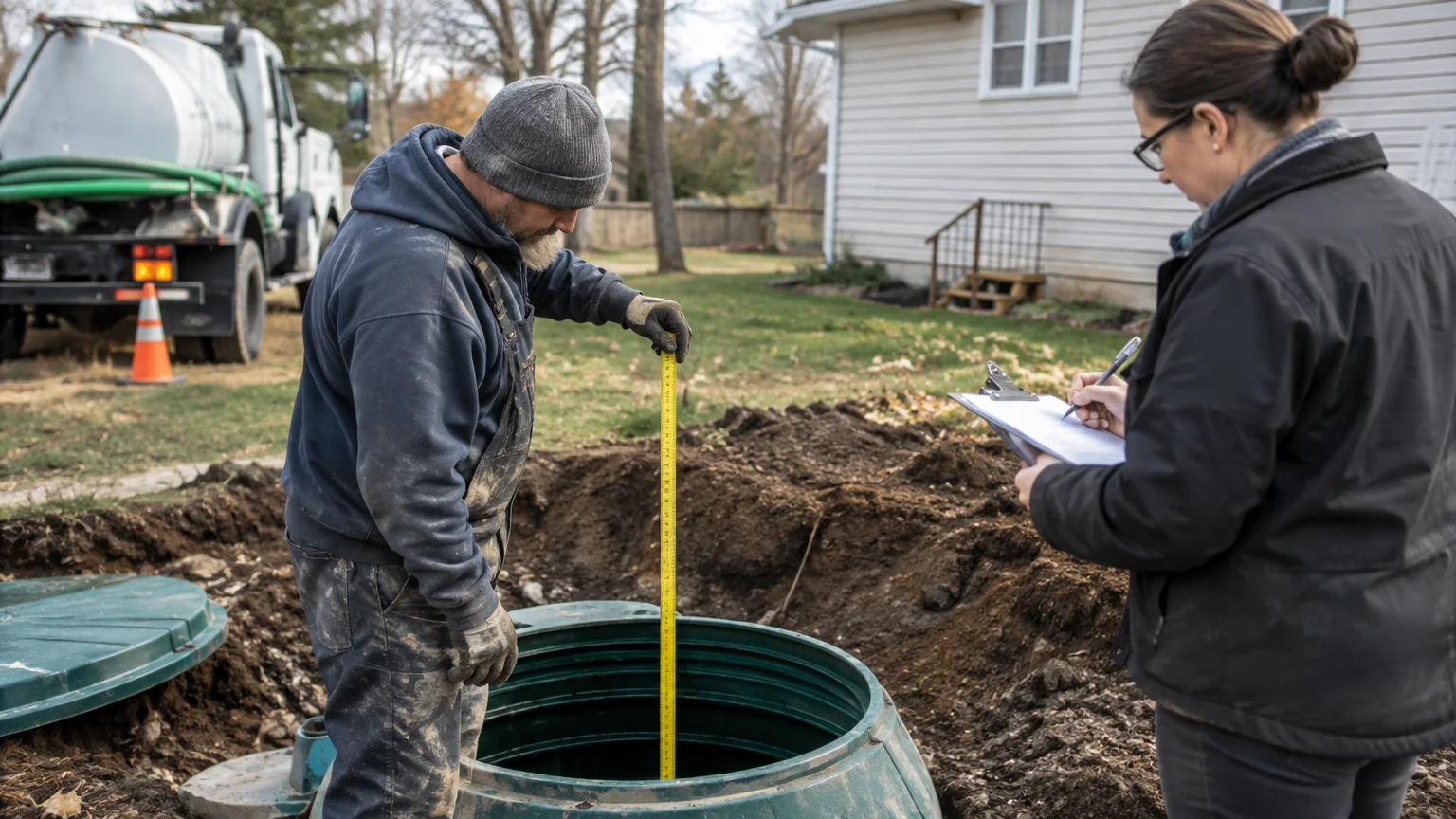
The best way to check tank size is to review the permit and installation records. Then confirm the details during an inspection. Records may show the capacity, location, drainfield design, and approved bedroom count.
Start with the county or local health department. Some offices keep septic permits in property files or online systems. A property search may help find the parcel, but tax records may not show the tank size.
You can also search papers from a home purchase. Useful records may include a septic permit, inspection report, as-built drawing, survey, repair bill, or tank receipt. Sellers, former owners, builders, and property managers may have copies.
A safe records checklist includes:
- The original septic permit
- The approved site or as-built plan
- Pumping and inspection records
- Documents from a sale or remodel
- Notes about the tank lid and access point
A professional inspection can confirm the tank location, likely capacity, condition, inlet and outlet pipes, baffles, filter, and visible trouble signs. The inspector may need to uncover a lid or use other tools. Never enter a septic tank. Gases inside can kill.
If records are missing, the tank may be measured or identified by its build and access points. That result should still be checked against local rules before replacement or expansion.
What Should You Confirm Before Installing or Replacing the Tank?
Before installing or replacing a septic tank, confirm the permit, approved capacity, setbacks, soil findings, access plan, and drainfield design. The work should match local rules and the actual land conditions.
Setbacks are required spaces between septic parts and features such as wells, property lines, buildings, streams, and surface water. Exact distances depend on local rules and site conditions. Do not rely on a diagram from another state.
Important questions include:
- What tank capacity is approved for the home?
- Does the project need a new permit?
- Where are the tank and drainfield located?
- Are setbacks still met after planned changes?
- Is there a reserve area for future repairs?
- Can pumping equipment reach the access lids?
Pumping and inspection records help with future choices. They may show how fast solids build up, whether filters were cleaned, and whether past owners reported backups or odors. Records cannot replace a current inspection, but they give useful history.
Replacement work may find old materials, damaged pipes, or a drainfield that needs help. Review the tank and drainfield as one system. A permit office, qualified inspector, or septic service worker can explain the next safe step.
For homeowners and the wider Jacksonville area, Septic Tank Pump Jacksonville can help review the available information and point out what needs professional confirmation.
Frequently Asked Questions
Is a three-bedroom house always approved for the same tank size?
No. Local rules, expected water flow, soil, and system design can change the approved capacity. Bedroom count is often a starting point, not the full answer. Check the property permit before installation, replacement, or an addition.
How do you find septic tank records online?
Start with the county or local health department record system. Search by parcel number, street address, or owner name when allowed. Online files may be incomplete. You may need to request older permits, inspection reports, or as-built plans.
Who performs a perc test?
A qualified soil worker, engineer, or approved specialist usually performs or oversees a perc test. Local rules decide who may complete it. The test helps review soil drainage, but it does not decide tank size by itself.
How deep should a septic tank be?
The tank should connect with the building sewer and approved drainfield while staying easy to reach. Pipe height, soil, groundwater, slope, and local rules affect depth. A professional should confirm the final level before digging or replacement.
Is a septic tank the same as a cesspool?
No. A septic tank is a sealed container that separates solids and sends liquid to a drainfield. A cesspool is an older wastewater structure that may let liquid move through its walls. Local rules may restrict, regulate, or require replacement of older systems.
Key Takeaways
- A three-bedroom home has no one universal septic tank size.
- Bedroom count, water use, soil, and local rules affect the design.
- Tank capacity and drainfield size are separate system parts.
- Depth depends on pipe height, groundwater, soil, access, and permits.
- Records and a professional inspection give the best property answer.
Conclusion
The question of what size septic tank for 3 bedroom house cannot be answered by bedroom count alone. Local rules, water flow, soil, drainfield limits, and site access all matter. Existing permits and inspection records are the best place to start.
A homeowner can gather papers and look for safe access points without digging. Tank entry, deep digging, wastewater contact, and system changes need trained help. Contact us to discuss the next step with Septic Tank Pump Jacksonville.